Wednesday, March 23, 2016

French Renaissance #1

          The French Style was determined by religious and political history of the eras and led by their leaders. It was a time where a ruler's influence was the most pervasive in Renaissance France. The Royal "taste" determined the design styles used at this time. With that being said, France was central to Romanesque and Gothic style. Gothic was a period that gave birth to many masterpieces than any other country before. Between the Gothic and French Renaissance, they suffered difficult times. The Black Death hit hard in France in the middle of the 14th Century. Also at this time was the Hundred Year's War. This led to almost destroying France's feudal nobility in 1337 to 1453 AD.

          The decorator became prevalent during this period. Before this came about, designing a luxurious room that provided consistency and harmony was a very complex job. In order to accomplish these tasks, a new type of profession had to come about. This sparked the ornamaniste or decorator profession. The decorator's position required conceiving a great interior as well as explaining the design to a client. Part of their job was to supervise the artisans to produce the highest quality of design.

          The architecture in France was very different than Italy. There was no need for a new religious structure because they built palaces and chateaux. Exteriors became important, and there were sprawling plans on the chateaux. Their climate required that the roofs be steep. They also had many chimneys and large windows. Roofs often had two slopes with dormer windows. A roof of this time was the mansard roof. This was created by Francois Mansart, a French Baroque architect. A lot of the times the interiors did not reflect the exterior style; this is very different than today's design.

          An example of a chateau that was built during this period was the Chateau de Chambord. It was partly designed by Leonard Da Vinci. The building had magnificent chimneys, dormer windows, a double staircase, and used the fleur-de-lis. The double staircase started at opposite sides and would never meet. Fleur-de-lis was a design motif that is still used in design today.

Images | Past


Images | Present


Extra Credit | https://www.youtube.com/watch?v=mViV9N-1Doo

Friday, March 18, 2016

Spanish Period | Reviews

Madelyn: I really liked how she broke down the furniture and interiors during this time. She provided great examples as well. Her first current application image is very intricate.

Krista: She provided a lot of great current applications. I really loved how they showed off the pools and courtyards that were evident during this period. Good job overall.

Wednesday, March 16, 2016

Spanish Period

The Spanish Period was influenced greatly by the Moorish, Early Christian, Medieval, and the Italian Renaissance. The 16th century was known as the most brilliant era in Spanish history. The reasoning for this was due to the voyages of Columbus. This reigned the time where he acquired title to the New World. Successful navigators and traders resulted in fabulous amounts of gold and silver bullion. The century was ended abruptly due to bankruptcy.

This was a time where more castles were in Spain rather than any other European country. They were built of concrete walls faced with brick. Castles were typically built by noble Christian families. An example of this would be the La Mota Castle. Another example of a castle inspired building is the Granada Cathedral. This consisted of the traditional five-aisle building. The columns were Gothic in proportion and classical in its detail. It also provided Gothic vaulting within the interior.

The interiors of this time had the most artistic features. The features included superb iron grilles on windows, openings, and wrought-iron handrails. They provided colored tiles, and ceilings were pine-paneled, painted, and carved. Plasterwork was utilized as white decorative border or frame around doors and windows. The tile pictures resembled wall tapestries. Floors were covered in tile, stone, brick, or wood on the upper floors. During this time, Spain was the leading center in fine leather work. An example of this kind of work is the Cordoba leather.

Furniture was also an important feature throughout the Spanish period. The furniture provided simplicity and boldness. Heavy proportions were greatly expressed. Crude carvings and rectangular shapes were preferred. Panels were used repetitively to create a pattern. Walnut wood was the most commonly used feature; such as mahogany. Silver was also used extensively for ornamentation. Some examples of furniture include: Sillon de Frailero, wooden bench, walnut vargueno puente stand, and taquillion.

Images | Past


Images | Present


Extra Credit | https://www.youtube.com/watch?v=0zHkAowMKrU
Video clip on Alhambra - Granada, Andalusia, Spain

Wednesday, March 2, 2016

Italian Renaissance | Reviews

Rachael: She did a great job providing a sufficient amount of information. Her current applications were awesome. They were very rich and detailed; showing off the time period perfectly.

Emma: I liked how she focused on one specific item: the Palazzo Davanzati. It shows that she was interested in this particular building. I also enjoyed the images she provided after her statements.

Monday, February 29, 2016

Italian Renaissance

The Italian Renaissance began throughout 1400 and ended around 1600. During this time, many great artists, inventions, and the like came about such as the printing press. The Renaissance was known for the "rebirth" that began in Florence, Italy. There was a shift from a religious to a secular emphasis that was based on humanity. The Roman Catholic Church had also become very powerful; this demonstrated corruption and misconduct. Martin Luther was a great figure at the time. He created reforms within the church to rebel against what was happening with the misconduct and corruption.

Throughout this era, Residential design became extremely popular. Comfort, convenience, and beauty became very important. This differed from the past when everybody was primarily focused on safety, strength, and protection. The furniture and interiors had elaborate turnings for structural support and ornamentation. Fresco's demonstrated an expansion of space. Paneling was used along furniture and surfaces as well. The interiors showed off their decorative moldings on doors and door frames. They had elaborate coffered ceilings; this included painted walls and ceiling decorations. They also had elaborate fireplace mantels as well as pilasters that were flat decorated columns. The floors were brick, terra-cotta tile, or marble in geometric patterns. Furniture was portable and sparse. It had inlays of ivory, lapis, marble, onyx, and other stones such as marquetry. Walnut was only utilized for the finest furniture. An example of a chair is the Sedia. The Sedia is a straight box-like armchair. It has straight rectangular legs attached to the floor stretchers. It also has a turned baluster or vase-like forms that support the front of the arms. Another example of a chair is the sgabello. The sgabello is a stool with a back. It has a small octagonal or rectangular seat supported by three legs. It is used for dining or all-purpose chair styles. 

Images | Past


The Printing Press

Sgabello Chair

Images | Present


Extra Credit | Short clip of a modern printing press.
https://www.youtube.com/watch?v=CN_KhB9SjVs

Wednesday, February 24, 2016

The Americas & China and India | Reviews

The Americas
1) Haley: She did a really good job explaining each of the four regions during this time. She provided great distinctions between them as well. I enjoyed her current day applications because they were very different from images on the power point presentation.

2) Emma: She did a wonderful job on breaking down the time period. She also provided excellent images that really represented the time period. I like how she broke down a paragraph and they provided images to explain that specific paragraph. It really helped follow what actually happened.

China and India
1) Amanda: I enjoyed her images, both past and present. They were all very intriguing, and they fit well into the era! Good job overall.

2) Savannah: Her images of the present applications were really cool. I particularly liked the ceiling elements in her current applications. They still had the Chinese motif, which really tied together the whole room.

China and India

China and India reigned throughout 1600 BC to 1912 AD. Although they are different regions, they have great similarities as well as differences.

China had the  use of red and gold for a color palette. They used layers in their construction. Instead of using nails, they used joinery techniques for their structures. Their buildings were very intricate and solid due to this; especially since they were made out of wood. The structures have lasted 900 plus years and are still standing today. The buildings created today may not withstand that long of time. Another unique fact with their buildings is that they would have rituals before they placed the wood on their structures. They would light firecrackers and the like to scare off any demons or bad vibes. It was more so focusing on their religion and beliefs in order to create harmony and peace.

China and India both had a stupa. A stupa is a mound of dirt, such as a burial ground, where a more permanent structure is built over the mound. This prototype was birthed in India. The stupa came to China as Buddhism spread to that region. There were great limitations with the stupa due to it not having enough space for visitors. Due to this, Chinese invented the Pagoda; a combination of the Stupa and Chinese tower building. An example of this is the Liuhe Pagoda that was created in 1165 AD. An Indian stupa example is the Great Stupa of Sanchi.

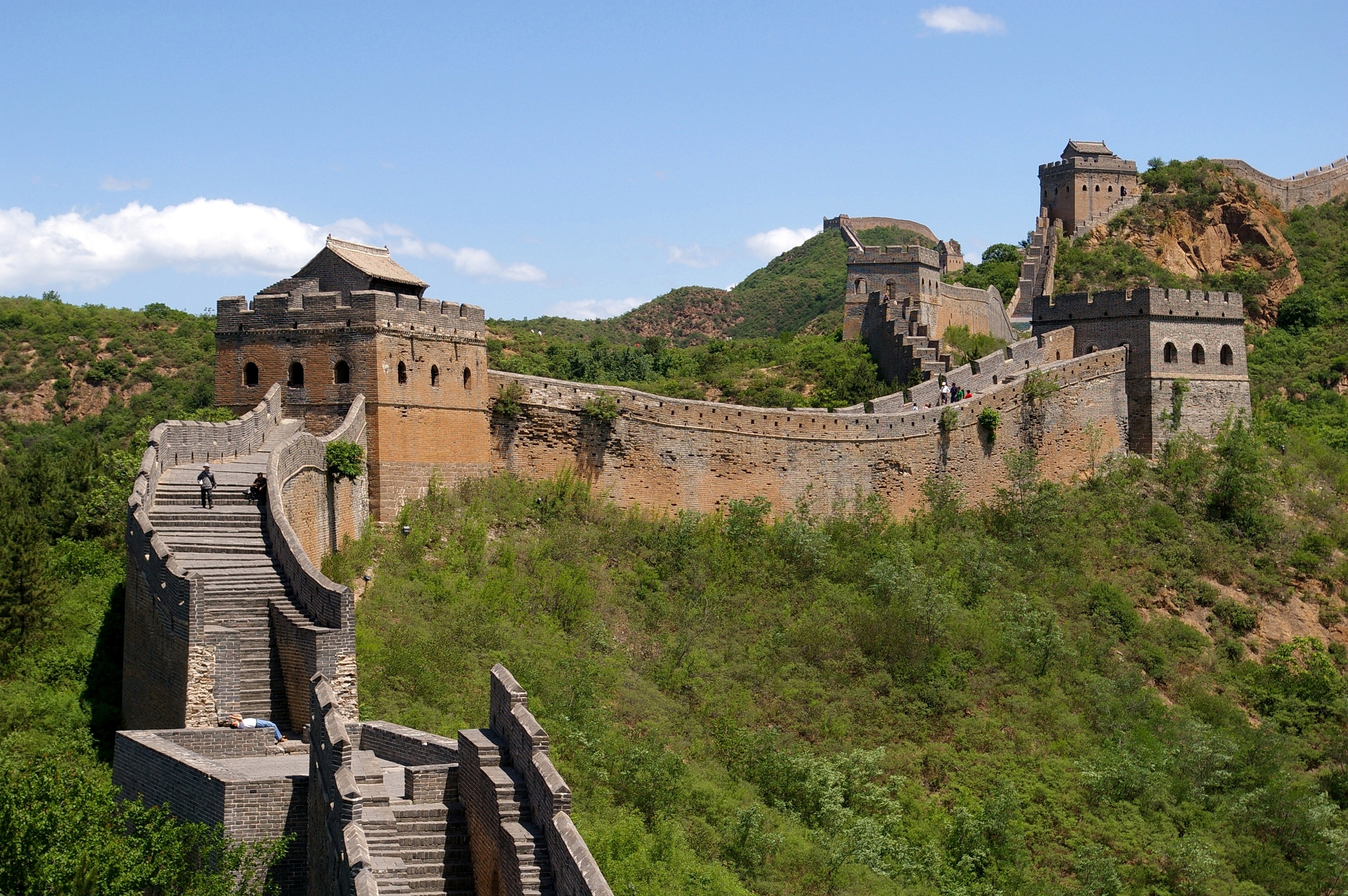
A great architectural element during this time was the Great Wall of China. It was built of stone, brick, wood, mud, and earth. It is located along the Northern border of China. It is said to be 5,500 to 13,000 miles long. The structures included watch towers so they could watch over their land for intruders.

Some of their furniture includes the folding chair and the yoke back chair. Their overall structure of their furniture includes weightlessness, beautiful, and stability. Both regions had a lack of furniture. People mostly sat on the floors or even slept on the floors.

Images | Past


Images | Present


Extra Credit | https://www.youtube.com/watch?v=T7BF0HiaP2s

Here's a short clip of more modern Chinese interiors.